Objective: The aim of this study was to evaluate the effect of low-level laser, Botox, and occlusal splints using electromyography in the management of muscle pain caused by bruxism.
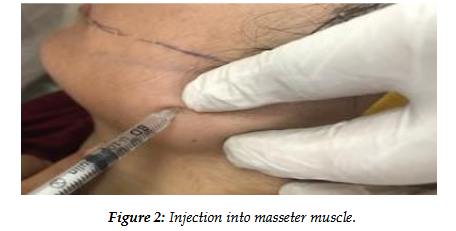
Materials and Methods: One hundred and twenty denture patients with age range of 20 to 40 years who had been suffering from bruxism for 2 months to 2 years were selected for this study. The patients were equally and randomly divided into four groups, each group receiving a specific treatment method. According to this study, group A received low-level laser on the masseter and temporalis muscles, group B received Botox on the masseter and temporalis, group C received a hard occlusal splint on the upper teeth, and group D received a soft occlusal splint on the upper teeth. Electromyography evaluation of the masseter and temporalis muscles using hard, soft foods, and maximum teeth pressure was performed before treatment, then at 3 months, 6 months, and 9 months, respectively. Results: Comparison of electrical activity at measurement times showed a statistically significant difference in the masseter and temporalis muscles after different treatment methods among the four groups, in which a decrease in EMG records was observed for Group A, Group B, and Group C, while Group D showed an increase in EMG records.
Conclusion: Within the scope of this study, Botox provided the best immediate results on muscle fatigue in bruxism, while laser provided longer-term results compared to Botox followed by a rigid occlusal splint.
Methods
This randomized controlled trial was conducted in Cairo, Egypt, between September 2018 and September 2019. One hundred and twenty patients were recruited from the outpatient clinic of the Department of Prosthodontics, Faculty of Dentistry for Women, Al-Azhar University. The following criteria were used to select subjects: Inclusion criteria:
Unilateral or bilateral myofascial pain lasting more than one month;
Complaint of pain when opening the mouth; teeth grinding, clenching or grinding. Exclusion criteria: Pregnancy and lactation; Heart disease and pacemaker; Malignant tumors; Degenerative joint diseases, psoriasis and rheumatoid arthritis; Myasthenia gravis and Lambert-Eaton syndrome; Congenital anomalies; Recent history of trauma; Pain treatment in the month before the study; Mental health problems; Dental diseases such as caries or pulpitis; Epilepsy; Use of chronic medications, occlusal splints or other treatments for pain control; Use of aminoglycosides; Lactose allergy; Tetanus vaccine in the past 12 months [9]. The sample size was calculated according to Demirkol, Nermin (2014). Assuming an alpha error of 0.05 and a power of 0.8, the maximum difference between groups was 206 and the assumed standard deviation of the difference was 1.07. A total of 30 patients in each group would be sufficient to reject the null hypothesis that the population means of the experimental and control groups are equal. The sample size was calculated using the PS program [9]. The history of all patients including personal, medical, dental and sleep history was recorded. All patients accepted the dental treatment and were informed about the procedures of this study and signed a written informed consent approved by the Research Ethics Committee (REC).
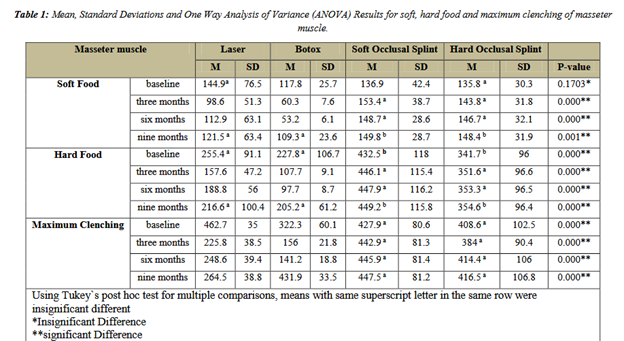
In cases where patients receive soft splints, EMG recordings for the masseter and temporalis muscles are increased due to the increased effort to balance the splint during delivery and adjustment, the compressive nature of the soft occlusal splint, the asymmetric wear patterns of the occlusal splint, and the patients’ awareness of having something compressible in their mouths, leading them to overbite the soft occlusal splint. [20].
Conclusion
Within the scope of this study, Botox provided the best immediate results with muscle fatigue in bruxism, while laser provided longer lasting results compared to Botox followed by hard occlusal splint.